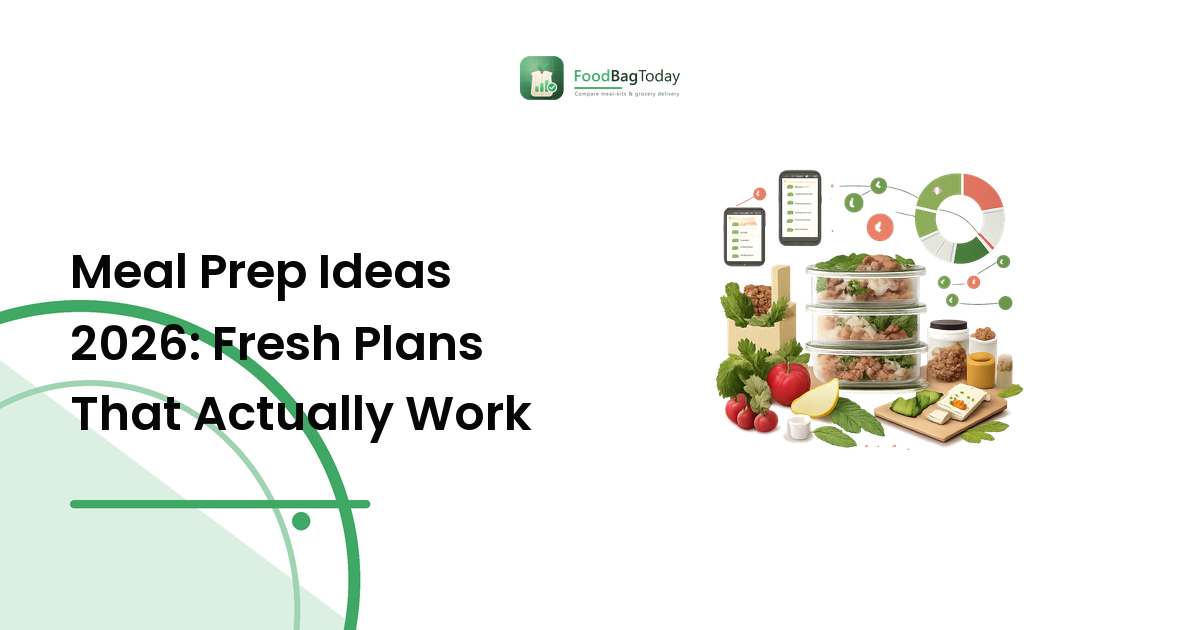
If you searched for meal prep ideas in 2026, you probably do not want a color-coded spreadsheet or fourteen identical containers of dry chicken. You want a handful of meals that survive a real week, come together fast, and still taste like food you actually chose to eat. That is what this guide gives you: practical meal prep ideas for 2026, the make-ahead meals worth starting with, a simple prep method, and the apps that genuinely help.
The short version up front: prep components, not whole dinners. Cook a couple of flexible building blocks — a grain, a protein, a sauce, some roasted vegetables — and combine them into different meals across the week. This keeps food interesting, cuts waste, and means one boring day does not sink the whole plan.
What's changed for meal prep in 2026
The core idea has not changed — cook ahead so weeknights are easy — but the way people prep has loosened up. The rigid "cook six identical lunches on Sunday" approach is fading because it leads to burnout by Wednesday. The more durable meal prep style in 2026 is modular: a few prepped components you mix and match, plus a short list of assemble-in-minutes meals. It is less about heroic Sunday marathons and more about small, repeatable habits that fit around the rest of your life.
The other shift is realism about how much you can prep. Most people who stick with meal prep do only two or three things ahead of time, not the entire week. That is not a failure of discipline; it is the version that actually lasts.
The best meal prep meals to start with
If you are looking for the best meal prep meals, start with dishes that hold up in the fridge for three to four days and reheat without turning sad. These are reliable:
- Grain bowls. Cook a batch of rice, quinoa, or farro. Top with a prepped protein, roasted vegetables, and a sauce. Different topping each day, same base.
- Soups and stews. Chili, lentil soup, and minestrone often taste better on day two and freeze well for later weeks.
- Roasted vegetable trays. Sheet-pan vegetables reheat well and slot into bowls, wraps, eggs, or pasta.
- Overnight oats or chia pots. No cooking, made the night before, breakfast solved for several days.
- Marinated and baked proteins. Chicken thighs, tofu, or salmon portioned out for bowls, salads, and wraps.
The trick is not cooking one giant meal — it is cooking a few of these components so any single day can become two or three different plates. That variety is what stops the mid-week abandonment that kills most prep routines.
Meal prep how to: a simple 5-step method
Here is a meal prep method simple enough to repeat every week without dreading it.
- Check the week first. Count the nights you will actually cook or need lunches. For most people that is three or four, not seven. Prep for those, not for a fantasy week.
- Pick two anchor components. Choose one protein and one base (a grain or roasted vegetables) to cook in bulk. These are the backbone of several meals.
- Add one sauce or flavor booster. A vinaigrette, a yogurt-herb sauce, or a spicy mayo turns the same components into different meals. Flavor is what prevents boredom.
- Prep in one 60–90 minute block. Roast the vegetables and protein at the same time, cook the grain on the stove, and make the sauce while things bake. Batch the oven; do not run it for one tray.
- Portion and label. Store components separately so you can rebuild fresh plates, not soggy pre-mixed boxes. Label anything going in the freezer with its date so it does not become a mystery brick.
That is the whole system. Two components, one sauce, one prep block. If you want a fuller weekly framework to wrap around it, our practical meal planning guide walks through building the plan and grocery list step by step.
Best meal planning apps
You do not need an app to meal prep, but a good one removes friction if a paper list keeps getting lost. When choosing the best meal planning apps, judge them on a few things: how fast you can add your own recipes, whether it auto-builds a grocery list from your plan, and whether it syncs across your phone and household. Look for these features rather than a specific brand:
- Recipe import and your own meals. The app should hold the meals you actually cook, not just a locked recipe library.
- Automatic grocery list. The real time-saver is turning a week's plan into a shopping list without retyping ingredients.
- Calendar-style layout. Slotting meals onto days (and leaving nights blank) matches how real weeks work.
- Household sync. Everyone seeing the same plan and list avoids double-buying.
Pick the one whose weekly rhythm matches yours. The best app is the one you will open every Sunday, not the one with the longest feature list.
Best grocery list app
The best grocery list app is the one that gets your whole household adding to the same list in real time. The single most useful feature is shared, syncing lists — so a partner can add milk from the kitchen while you are already at the store. Beyond that, look for lists that group items by store aisle or section, which cuts the backtracking that makes shopping slow.
A few selection criteria worth weighing:
- Real-time sharing. Multiple people, one live list, no texting "did you get eggs?"
- Aisle or category grouping. Produce together, dairy together — fewer laps of the store.
- Reusable staples. Quick re-add of the items you buy every single week.
- Ties to your plan. Bonus points if it connects to your meal planning app so the list builds itself.
If you already use a meal planning app with a built-in list, start there before adding a separate tool. Two apps that do not talk to each other create more work, not less.
Make-ahead ideas for busy and budget weeks
Not every week has a spare 90 minutes, and not every week has spare cash. For tight-on-time weeks, lean on no-cook prep: overnight oats, chopped salad jars, and washed-and-cut vegetables ready to grab. Even ten minutes of prep — washing produce, portioning snacks — lowers the friction that leads to takeout.
For tight-on-budget weeks, anchor your prep to cheaper staples: dried beans and lentils, eggs, frozen vegetables, and in-season produce. Cook a big pot of something bean-based, portion it, and freeze half for a future week so nothing spoils. Buying and cooking around a couple of inexpensive anchors keeps the cost per serving low without sacrificing variety.
Keeping prepped food safe and fresh
Meal prep only saves time if the food is still good when you reach for it. A few basics keep it that way. Cool cooked food promptly and refrigerate it within about two hours. Most prepped meals are best eaten within three to four days; anything longer should go in the freezer. Store components in airtight containers, and keep dressings and sauces separate until you eat so salads and grain bowls do not go soggy. Reheat leftovers until steaming hot all the way through, and when in doubt about an older container, throw it out — a wasted portion costs less than a bad day.
Your first week of meal prep
You do not need to prep everything to make this work. This week, pick three meal prep ideas from the lists above, choose two components to cook ahead, and make one sauce to tie them together. Do it in a single prep block, store the parts separately, and let the rest of the week assemble itself. That modest, repeatable habit — not a perfect Sunday marathon — is the version of meal prep that will still be running in a month.