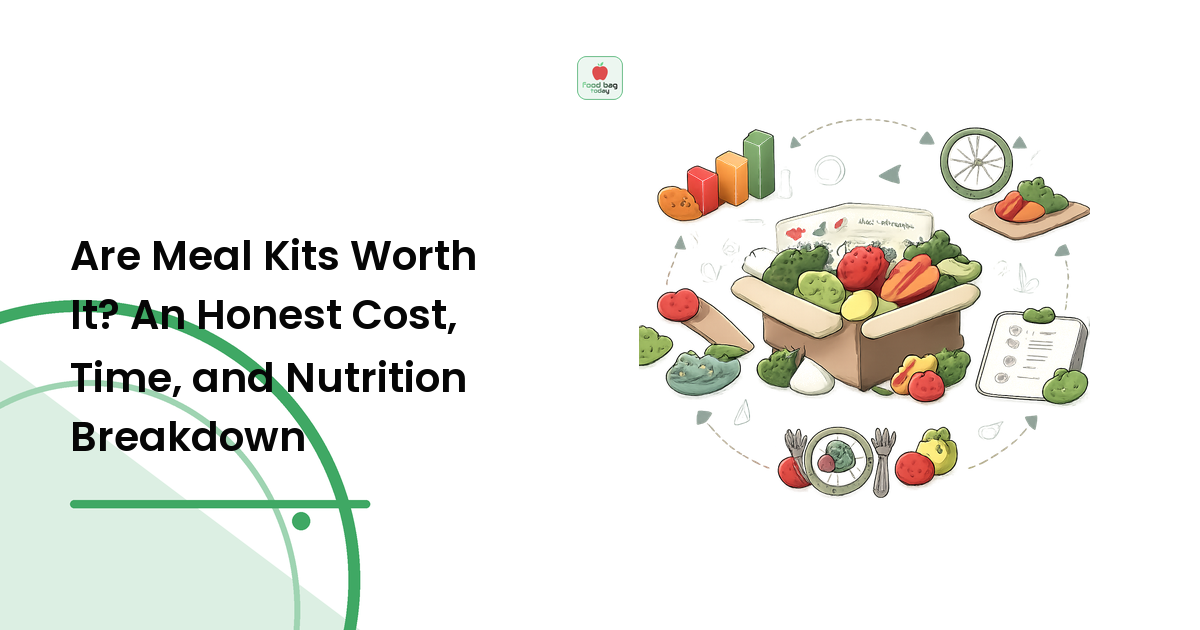
Are meal kits worth it? The honest answer is: for some people, absolutely — and for others, they're an expensive way to buy groceries. A meal kit trades money for time and mental effort, so whether it earns its price depends entirely on which of those is your real bottleneck.
Here's the takeaway up front. Meal kits usually cost more per serving than cooking from scratch but less than takeout, and what you're really buying is the planning, shopping, and portioning done for you. If decision fatigue, food waste, or a packed schedule are what actually stop you from eating well, that trade can be genuinely worth it. If your budget is tight and you already cook efficiently, a kit rarely pays for itself. Prices and plans change constantly, so treat the figures below as typical ranges to sanity-check against a specific service, not fixed quotes.
What you're actually paying for with a meal kit
Be clear about what lands in the box, because the food is only part of it. A standard kit bundles four things:
- The decision. Someone else chose a balanced set of recipes so you don't have to stare at a blank week.
- The shopping. Ingredients arrive at your door, already sourced, so there's no list and no store trip.
- The portioning. Everything is pre-measured, which is why kits waste so little food — you're not buying a whole bunch of cilantro for two sprigs.
- The convenience premium. The markup that covers packaging, cold-chain delivery, and the labor of doing all of the above for you.
This is the key to the whole "worth it" question: you're not mainly paying for groceries, you're paying to delete the planning-and-logistics part of cooking — which for a lot of busy households is exactly the part that breaks down.
The real cost of meal kits, per serving
Cost is where most people decide, so let's be concrete. Based on commonly reported pricing, classic dinner kits tend to land around $9 to $13 per serving, sometimes lower with an introductory discount and higher for premium proteins or heat-and-eat prepared meals. Cooking the same meal from your own groceries typically runs $4 to $8 per serving, depending on the protein and where you live. Takeout and delivery apps, once you add fees, tips, and markups, often climb to $15 to $25+ per serving.
So meal kits sit squarely in the middle: pricier than a home-cooked plan, cheaper than ordering in. Here's the fuller picture, because cost per serving alone doesn't capture the trade:
| Option | Typical cost per serving | Planning & shopping effort | Food waste | Cooking required |
|---|---|---|---|---|
| Cook from a plan | ~$4–8 (lowest) | You do it all | Depends on your habits | Full |
| Meal kit | ~$9–13 | Done for you | Low (pre-portioned) | Light to moderate |
| Prepared meal delivery | ~$11–15+ | Done for you | Low | None (reheat) |
| Takeout / delivery apps | ~$15–25+ | None | None | None |
One honest caveat: if you routinely buy fresh ingredients and let a chunk of them rot, your real cost of cooking from scratch is higher than the sticker price — and a near-zero-waste kit closes the gap more than the per-serving numbers suggest.
Do meal kits actually save time?
Partly, and it's worth knowing exactly which part. A meal kit removes the deciding, the list-making, the shopping, and the measuring — often the real friction that ends with you ordering pizza at 7 p.m. What it does not remove is the cooking, which still runs 20 to 40 minutes plus cleanup — and advertised "30-minute" times tend to run long the first time, before the steps are familiar.
If your bottleneck is "I don't have the bandwidth to plan and shop," a kit is a strong fix. If your bottleneck is "I don't have 30 minutes to stand at the stove," a kit helps less — a prepared, reheat-only meal service or a batch-cooking habit will serve you better.
Are meal kits healthy?
Meal kits can be a genuinely healthy choice, but they aren't automatically one — and honest guidance means saying so. On the plus side, portions are controlled, meals are cooked at home from recognizable ingredients, and most services offer vegetable-forward and lean-protein menus. That alone often beats the default of takeout.
The things to watch are the same as with any packaged food: sodium in the sauces and spice blends, calorie-dense finishing sauces, and indulgent portions on certain "comfort" recipes. A kit is a tool, not a diet — choose vegetable-forward, lean-protein menus, glance at the nutrition information as you would on any label, and the health question mostly takes care of itself.
Who meal kits are worth it for
Meal kits earn their price most clearly for:
- Time-strapped households — demanding jobs, new parents, caregivers — where the planning-and-shopping load is the thing that keeps collapsing.
- Chronic over-orderers. If you're spending on takeout several nights a week, a kit is usually cheaper and healthier, so the premium over groceries is beside the point.
- People who hate deciding. If "what's for dinner?" is a daily stress, outsourcing the decision has real value that doesn't show up on a receipt.
- Big food-wasters. If produce regularly dies in your fridge, pre-portioned kits can be close to break-even.
- Beginner cooks and one- or two-person homes. Kits are excellent training wheels for learning technique and portions, and they spare small households from grocery packs sized for a family.
Who should probably skip meal kits
Just as honestly, kits are a poor deal for:
- Tight budgets where every dollar counts. Cooking from a simple plan is reliably cheaper per serving, full stop.
- Confident cooks with an efficient routine. If you already shop and cook smoothly, you're paying a premium to remove friction you don't have.
- Large families. The per-serving markup multiplies fast across five or six plates.
- Specific or strict dietary needs. Kits offer limited flexibility; if you need tight control, your own groceries win.
- People who like the store. If picking your own produce or supporting a local market matters to you, a box can't replace that.
How to get meal-kit value without overpaying
If you lean toward trying one, a few habits keep it from quietly becoming an expensive default:
- Do the math on the regular price, not the intro deal. The first cheap box is marketing. Decide whether the ongoing price is worth it to you.
- Use it as a hybrid, not a replacement. Order kits only for your two or three busiest nights and cook simply the rest of the week. You capture the convenience where it counts and keep your grocery bill down.
- Stay flexible. Reputable services let you skip, pause, or cancel — do it for travel weeks instead of paying for food you won't be home to cook.
- Learn from it, then graduate. Save the recipes you love and rebuild them from your own groceries at a fraction of the cost. A kit can be a cooking course you eventually outgrow.
- Mind shipping fees and minimums, which can quietly erase the savings versus groceries.
That hybrid approach pairs beautifully with a light homemade routine for the other nights. Our meal planning guide shows how to build one in about fifteen minutes a week, so the kit covers the crunch and a simple plan covers the rest.
Is a meal kit worth it for you? A quick checklist
Answer these honestly:
- [ ] You regularly throw out groceries you meant to cook.
- [ ] "What's for dinner?" is a genuine daily stress point.
- [ ] Your schedule leaves little or no time to shop.
- [ ] You order takeout more often than you'd like because cooking feels like too much.
- [ ] You want to learn to cook without over-buying ingredients.
Nodded at three or more? A kit is likely worth trying for a few weeks. Mostly no? Your money goes further with a homemade plan.
Frequently asked questions
Are meal kits cheaper than groceries?
Usually no. Cooking the same meal from your own groceries typically costs less per serving. But meal kits are reliably cheaper than takeout, and because they're pre-portioned, they can narrow the gap for households that waste a lot of fresh food.
Are meal kits worth it for one or two people?
Often yes. Small households frequently waste grocery packs sized for families, so the pre-portioning is worth more to them. The per-serving premium is easiest to justify for one to two people and hardest to justify for a big family.
Do meal kits actually save time?
They save the planning, shopping, and measuring — commonly the real bottleneck. They don't remove the cooking, which still runs about 20 to 40 minutes per meal, plus cleanup. If you need to skip cooking entirely, a reheat-only prepared service fits better.
Are meal kits healthy?
They can be. Portions are controlled and meals are home-cooked from real ingredients, which beats most takeout. Watch the sodium in sauces and spice blends and pick vegetable-forward, lean-protein menus, and a kit is an easy way to eat reasonably balanced.
Can you cancel a meal kit anytime?
Most services are flexible and let you skip weeks, pause, or cancel — but always confirm the terms before you claim an intro discount, since the appeal of a kit rests on the ongoing price being worth it, not the first cheap box.
What's the catch with meal kit intro discounts?
The first box is heavily discounted to get you subscribed; the real question is whether full price earns its keep for you. Decide based on the regular per-serving cost, and set a reminder before the discount ends so you can reassess.
So, are meal kits worth it?
They're worth it when they solve your actual problem — time, decision fatigue, or food waste — and they're not when your main goal is the lowest possible grocery bill. Run the checklist, do the math on the real price, and if a kit fits, try it for a few weeks with the freedom to stop. If it doesn't, a modest homemade plan gets you most of the same calm for less.
Whatever you decide, the win is the same: real meals with less friction, and less stress about dinner. For more no-hype, food-first guidance on eating well without overhauling your life, visit Food Bag Today.